


 Mood & Emotions
 Anxiety &
Stress
Anxiety &
Stress
 Trauma & Abuse
 Children &
Adolescents
Children &
Adolescents
 Addictions &
Habits
Addictions &
Habits
 Self-Harm &
Suicide
Self-Harm &
Suicide
 Relationships & Family
 Body Image &
Eating
Body Image &
Eating
 Gender &
Identity
Gender &
Identity
 Sleep Disorder


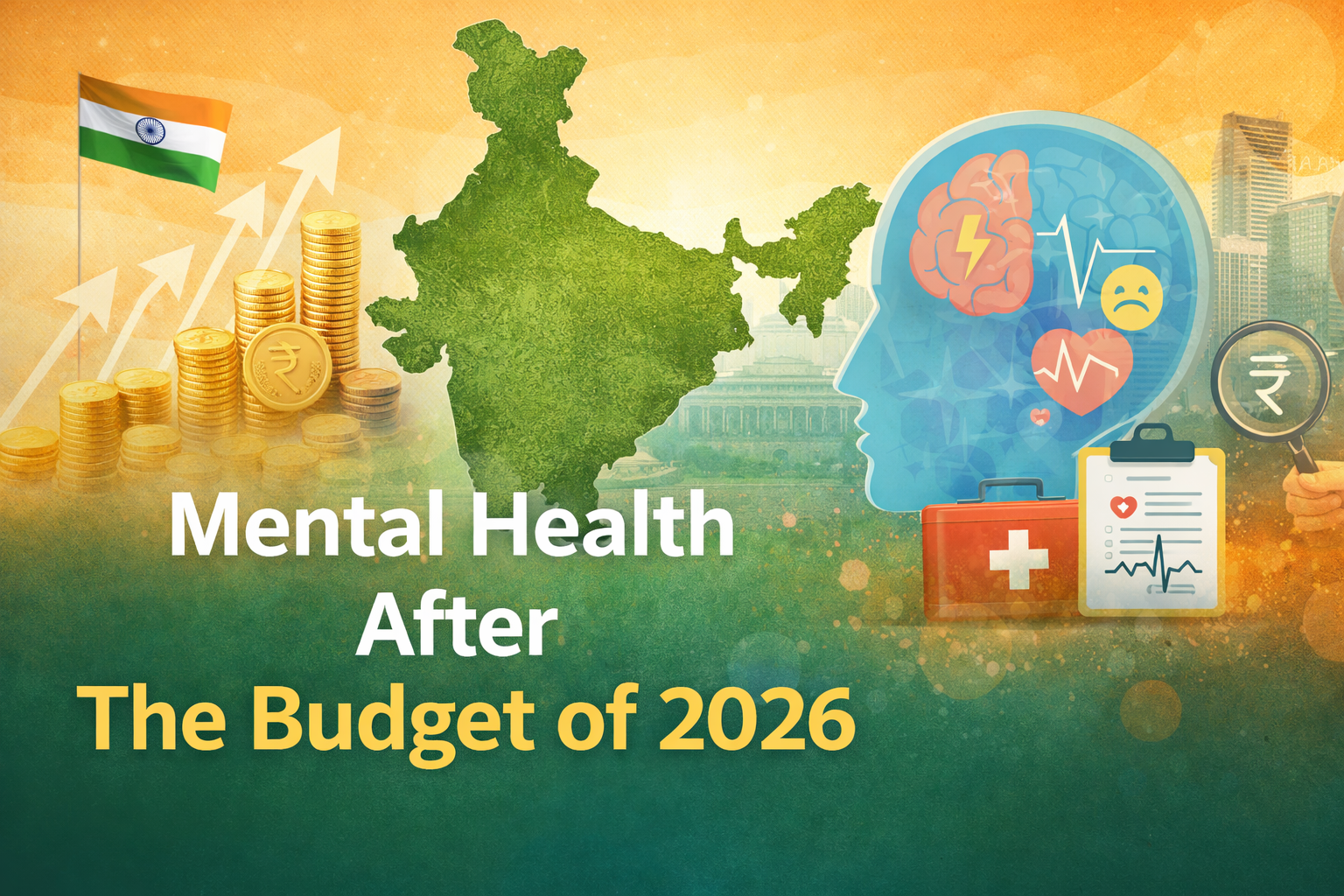
The 2026 Budget may not have used the language of emotions, burnout, or anxiety directly - but its priorities tell a story. A story about where care is expanding, where responsibility is shifting, and where mental health still needs attention beyond policy documents.
At Agan Health, we look at the budget not just as an economic plan, but as a psychological signal.
1. Mental Health Is No Longer Invisible - But It Is Still Fragmented
Over the past few years, mental health has moved from the margins into public discussion. The 2026 Budget continues this trend by reinforcing healthcare, digital access, and community-level support systems under the umbrella of public health led by the Government of India.
What this means psychologically:
- Mental health is being acknowledged, not ignored.
- Support is being framed as part of health, not weakness.
- But care remains unevenly distributed - urban vs rural, digital vs in-person, awareness vs access.
Recognition is a start. Continuity is the real challenge.
2. The Silent Impact on Families and Caregivers
Budgets often speak in terms of systems, but mental health lives inside homes.
When healthcare systems improve, families:
- Carry slightly less emotional load alone
- Feel more confident seeking professional help
- Are less forced to “manage everything internally”
But when mental health services are stretched or unclear, families become the first responders- often without training, support, or relief.
From a psychological lens, caregiver burnout remains one of the most under-addressed mental health issues, regardless of policy intent.
3. Workplaces Are Now a Mental Health Frontline
One of the clearest indirect messages of the 2026 Budget is this:
The workplace is no longer separate from wellbeing.
As economic productivity, skilling, and workforce participation are emphasized, the emotional cost of stress, burnout, and disengagement becomes harder to ignore.
For employees, this shows up as:
- Chronic stress without recovery
- Emotional fatigue masked as “performance issues”
- Difficulty asking for help at work
For organizations, it raises an uncomfortable truth:
Productivity cannot be sustained without psychological safety.
This is where corporate mental health stops being an HR initiative and becomes a leadership responsibility.
4. Digital Access Helps - But Human Care Still Matters
The expansion of digital health and technology-enabled services improves reach, especially for those who previously had no access.
But mental health is not only about access - it’s about connection.
- Apps can support awareness
- Tools can help with self-regulation
- Assessments can guide next steps
Yet healing often happens in safe conversations, consistent therapy, and trusted relationships.
Technology can open the door.
Human care is what helps people walk through it.
5. What This Moment Calls For - Beyond the Budget
Budgets can allocate funds, but mental health improves when cultures change.
This moment calls for:
- Normalizing therapy, not only during crises
- Early intervention, not delayed help
- Support at home, school, and work - not just hospitals
- Preventive mental health, not only reactive treatment
At Agan Health, we see daily how early conversations prevent deeper distress later.
A Gentle Closing Thought
The 2026 Budget reflects progress - but mental health doesn’t improve on paper alone.
It improves when:
- A parent feels safe asking for help
- An employee is heard without judgement
- A young person learns that struggling doesn’t mean failing
Mental health isn’t built in a single financial year.
It’s built slowly, through care, consistency, and compassion.
And that work continues - long after budget speeches end.


 Bengaluru